Hand tie-dye is a way of making patterns by tying or binding sections of fabric by hand before dyeing. The bindings limit how much dye reaches the compressed cloth. When the fabric is opened, those areas may keep their original color or take on a lighter shade. This is a form of resist dyeing, and it can produce anything from tiny rings to broad washes of color.
How Does Hand Tie-Dye Work?
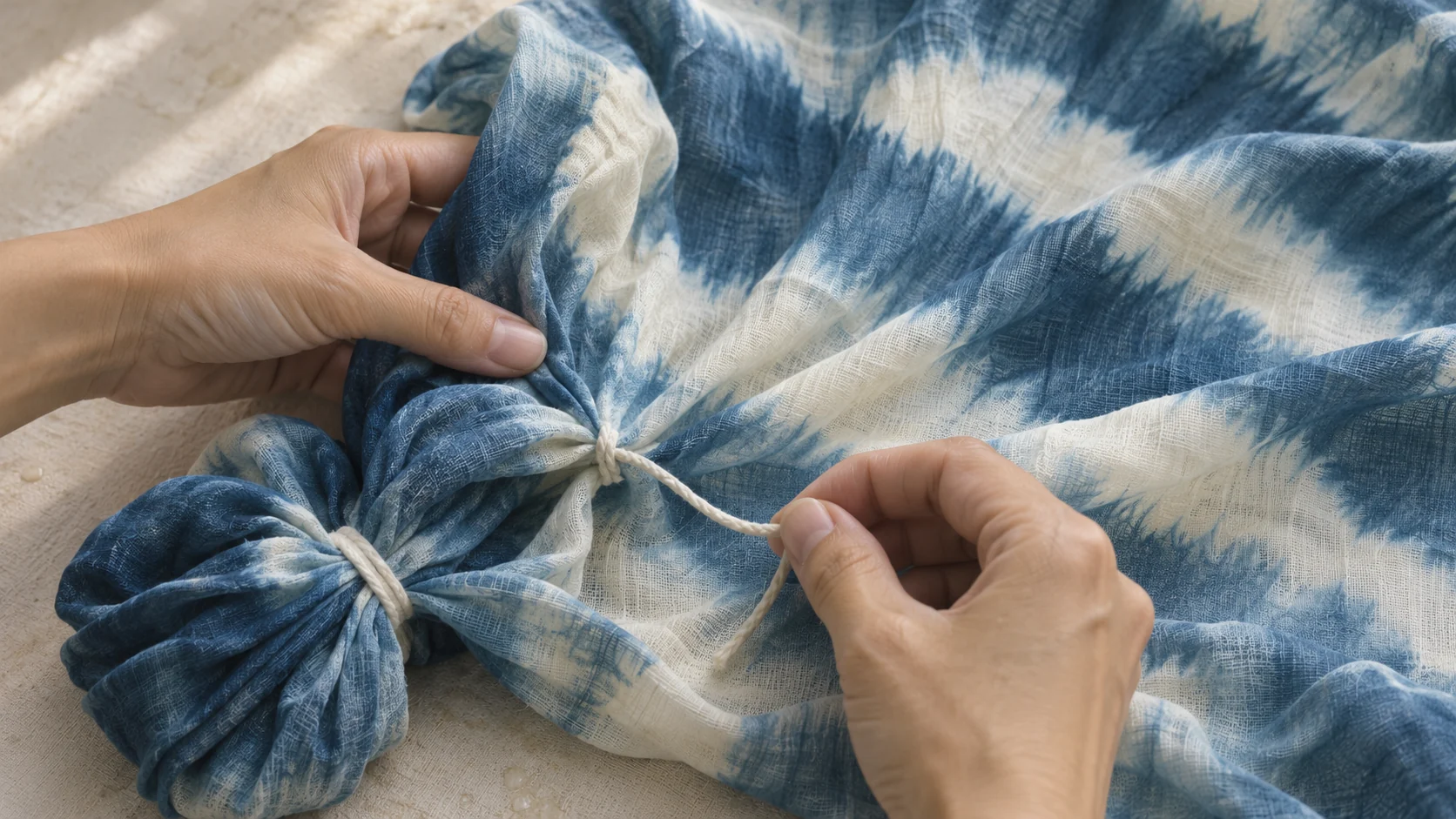
The pattern starts with how the maker handles the cloth. Pinching a point and tying around it can create a ring. Folding the fabric into pleats and binding it at intervals can create bands. Twisting the cloth from a central point can create a spiral. The folds and ties determine where the dye has room to move.
Once the fabric is bound, the maker can dip it into a dye bath or apply dye to selected areas. The process for setting and rinsing the color depends on the fabric and dye. Removing the ties reveals the pattern, including the softer transitions where some dye reached the edges of a fold. For a closer look at how these methods work, see the Museum of Fine Arts, Boston’s guide to resist-dyed textiles.
Why Do Hand Tie-Dyed Pieces Look Different?
A maker can repeat the same folding pattern and use the same colors across several pieces. Small changes in fold placement or binding tension can still shift where the dye reaches the cloth. One piece might have a wider pale area, while another has a darker patch or a color boundary that falls a little lower.
That difference matters when you’re looking at a product photo. It helps to look at the overall palette and the scale of the pattern, then check the product description for what kind of variation to expect. A blue-and-white dress can have the same overall look even when the blue falls differently on the skirt.
Is Hand Tie-Dye the Same as Shibori?
Shibori is a Japanese family of shaped-resist dyeing techniques. Some methods use ties, while others gather the cloth with stitching or press folded fabric between blocks. Kanoko shibori, for example, uses ties around pinched sections of fabric. The Museum of Fine Arts, Boston’s shibori guide shows how different ways of shaping cloth produce distinct patterns.
In India, bandhani is a tie-resist tradition in which makers bind small points of cloth to create patterns of dots. The Museum of Art & Photography’s textile exhibition shows how bandhani appears in garments and textiles with their own regional histories.
What’s the Difference Between Hand Tie-Dye and a Tie-Dye Print?
In hand tie-dye, the pattern forms as dye reaches some parts of the bound cloth more readily than others. A tie-dye print applies a design that reproduces that look and can repeat the same motif across garments. A soft edge or an irregular patch can appear in either. If the production method matters to you, look for a description of how the fabric was dyed or printed.
“Hand-dyed” is a broader term. It describes how the color was applied and can include methods that use no ties. If a label only says “hand-dyed,” the specific technique is worth checking with the maker.
How Hand-Dyed Color Looks on a Dress
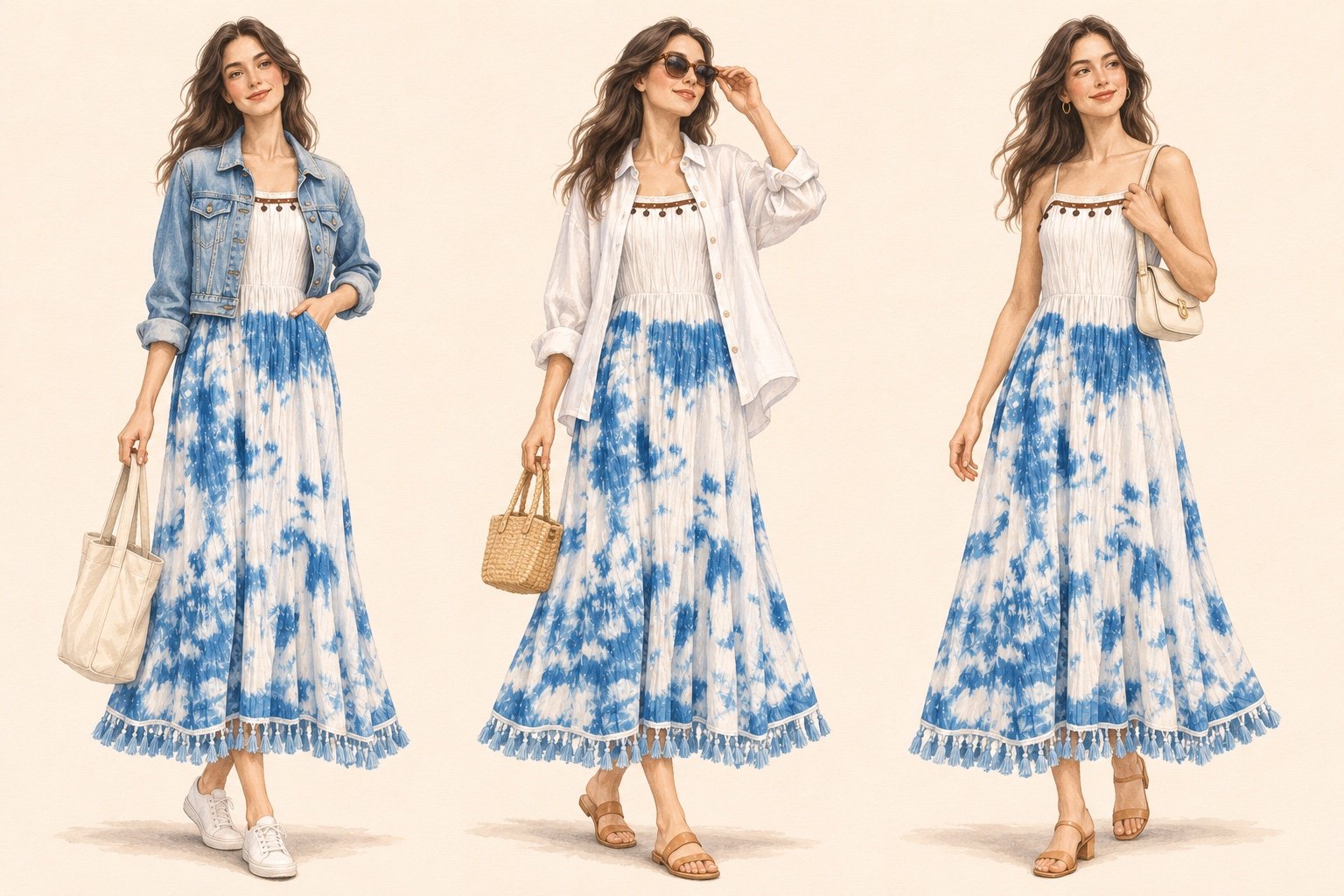
On a flowing garment, the pattern changes with the drape of the fabric. A wash of color that looks broad when laid flat can break into narrower bands as the skirt falls in folds. The Tidewash Maxi Dress offers a Wovallo example of this effect, with a soft blue-and-white pattern, a relaxed silhouette, and tassel details at the hem.
To see how different cuts frame the color, browse the Woven Tides collection of hand-dyed dresses.